building trust for business

Why Trust Is the Most Valuable Asset Your Business Can Build

Most business owners assume they have a marketing problem.

They want more website traffic. More leads. Better Google rankings. More social media engagement. More phone calls. Those things certainly matter, but they’re often symptoms rather than the real issue.

The real challenge is trust.

Every day, potential customers make decisions about who they’ll hire long before they ever reach out. By the time someone clicks Contact Us, fills out a form, or picks up the phone, they’ve already been collecting evidence. They’ve looked at your website, your reviews, your social media, your photos, your messaging, and the way you present your business online. They’re asking themselves one simple question:

“Do I feel confident choosing this company?”

The businesses that consistently answer that question well aren’t always the ones with the biggest advertising budgets. More often, they’re the businesses that make their experience clearly and boldly visible.

Unfortunately, that’s where many businesses struggle.

Years of experience get reduced to generic statements like “We’ve been serving our community for over 20 years.” Skilled craftsmanship gets summarized with “Quality is our priority.” Exceptional customer service becomes “Customer satisfaction is our goal.”

Those statements may all be true, but they aren’t proof.
Trust isn’t built by telling people you’re trustworthy. It’s built by showing them why.

Proof can take countless forms: a recent project that solved a difficult problem, a customer’s success story, before-and-after photos, a technician explaining a common question, a short video sharing practical advice, or even a simple post highlighting a job well done. None of these feel like traditional advertising because they aren’t. They’re documentation. They’re evidence that your business delivers real value to real people every single day.

That’s why I believe the most effective marketing often isn’t marketing at all.
It’s simply making the invisible parts of your business visible.

Every completed project, every customer interaction, every lesson learned, every challenge overcome, and every improvement your team makes becomes another opportunity to strengthen trust. Individually, they may seem small. Together, they become a powerful body of evidence that makes your business easier to believe in.

This is so important because search engines and answer engines (AI) are becoming real “evidence engines”. They’re looking for businesses that consistently demonstrate expertise, not just businesses that claim it.

Over time, that consistency changes the way people perceive your company.

Your website is active because it’s consistently updated with real and meaningful content. Your social media reflects genuine work instead of promotional noise, and expertise becomes visible instead of assumed. Customers stop wondering whether you’re qualified because they’ve already seen the proof for themselves.

That’s how trust grows.

Not through one perfect advertisement or one viral social media post, but through the steady accumulation of authentic evidence over months and years.

That’s also the philosophy behind this Building Trust series.

Every week we’ll explore practical ways businesses can reveal the expertise they already possess, strengthen their credibility, and become easier for customers to choose, not by manufacturing a better image, but by documenting the good work they’re already doing.

Because the goal isn’t simply to help people find your business.

It’s to help them stop searching.


Why About The Brand?

If you’re reading these articles thinking, “We should probably be doing more of this,” you’re not alone. In fact, you’re likely in the majority… blending in. Most business owners understand the value of documenting their work, sharing customer stories, answering common questions, and keeping their website active. The challenge isn’t a lack of ideas; it’s a lack of time (and sometimes a lack of confidence).

That’s where About The Brand is different. We’re not simply another marketing service, and we’re more than an extra set of hands checking items off a content calendar. As your brand partner, we’re an extra set of eyes looking for the everyday accomplishments that deserve to be seen. We focus on identifying the stories worth telling, turning them into meaningful content, and making sure they’re easy for future customers to find.

Over time, those stories become much more than blog posts or social media updates. They become a growing library of proof that strengthens your website, reinforces your expertise, supports your visibility in search and AI, and gives future customers even more reasons to choose your business with confidence.

You build the trust. We make sure people see it.

Because the goal isn’t simply to market your business.
It’s to make your business easier to trust, one documented accomplishment at a time.

Trust is one of the few business assets that grows stronger the more you invest in it. Every customer you help, every project you complete, every question you answer, and every story you choose to share adds another layer of credibility that works long after the job itself is finished. It has timeless value.

That’s why trust isn’t simply something your business earns.
It’s one of the most valuable assets your business can build.


Continue Building Trust

This article is part of the Building Trust series from About The Brand, where we explore practical ways businesses can build credibility through clearer messaging, visible proof, and consistent brand activity.

If your website and marketing aren’t reflecting the expertise you’ve spent years building, we’d love to help you change that; one month at a time. “Slow and steady wins the race.”

Explore the Building Trust Partnership →

Brand Differentiation

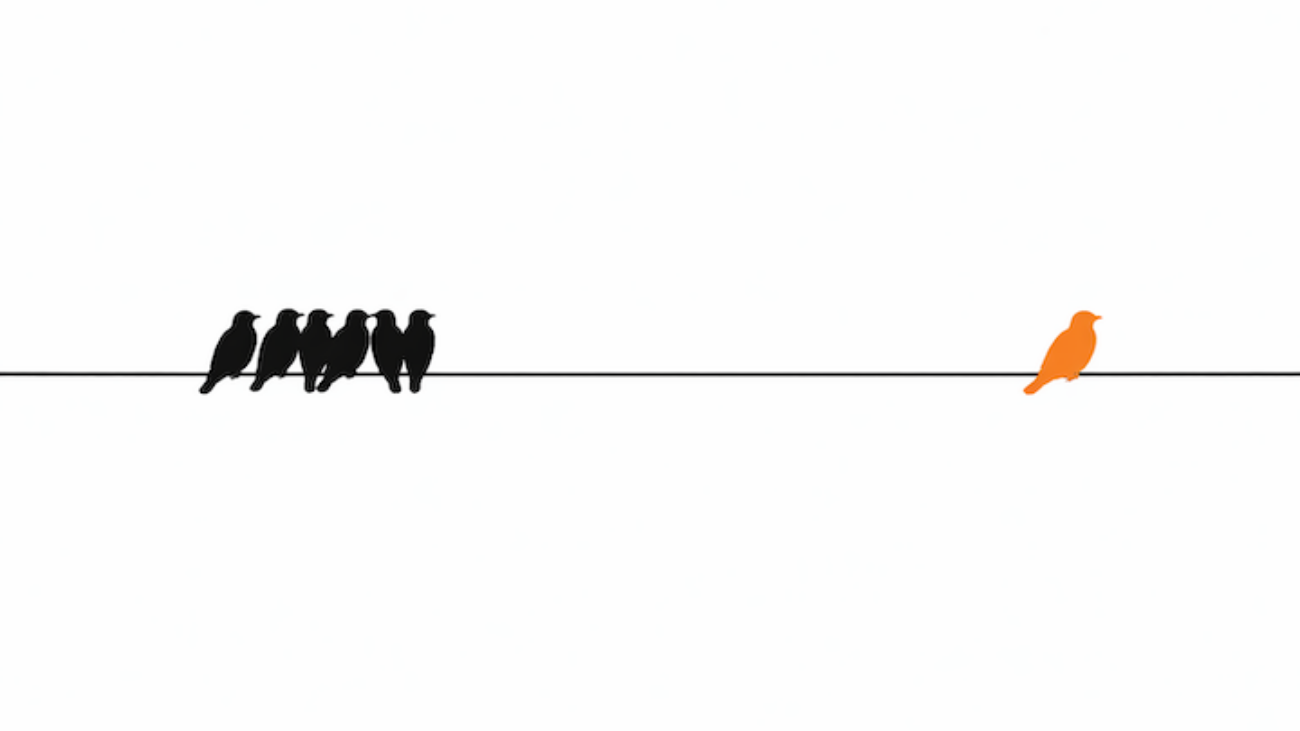
If You Look Like Your Competitors… You Are Your Competitors

You think the goal is to:

  • improve your service
  • tweak your messaging
  • run better ads
  • post more content

But if the foundation is unclear…

You’re just doing the same things; slightly louder – losing on ad spend.

And louder doesn’t win. Clear wins.


Customers aren’t stupid.

If everything looks the same from the outside, they simplify the decision:

“Who’s cheaper?”
“Who’s faster?”
“Who’s more convenient?”

That’s not a strategy.

That’s a race to the bottom.

And it’s where strong businesses slowly start looking average.


Most businesses don’t have a competition problem.

They have a clarity problem.

Because in reality:

You probably are better
You probably do care more
You probably have an edge

But if no one can see it immediately…

It doesn’t exist in the market.


You need to define it.

Your differentiation isn’t something you create out of thin air.

It’s something you uncover, organize, and communicate clearly.

Until that happens…

You’ll keep competing on the surface
while your real value stays hidden underneath… in the “soul” of your business. In your soul.


Most business owners don’t know.

They feel like they’re different…
But they’ve never tested it objectively.

That’s the gap.


We put together a simple tool to help you see your brand the way your customers do.

The 12-Point Brand Health Checklist will help you:

  • Identify where your brand is clear
  • Spot where you’re blending in
  • Uncover opportunities to stand apart

No fluff. No theory. Just clarity.


If you’re doing the same things as your competitors…

You’re in the same game.

And in that game, the only lever left is price.

But when your difference is clear…

You stop being compared and start being chosen.

compass ATB

The 4 C’s Every Strong Brand Is Built On

In a crowded market, attention is expensive—and trust is even harder to earn.
Brands that win long-term aren’t louder by accident; they’re structured with intention.

Across every successful brand, four foundational principles consistently show up. Miss one, and growth becomes harder than it needs to be. Get all four working together, and your brand starts doing the heavy lifting for you.

These are The 4 C’s: Clarity, Consistency, Credibility, and Connection.

1. Clarity: If You’re Confusing, You’re Invisible

Clarity is the starting point of every strong brand.

If someone lands on your website, social page, or marketing material and can’t quickly answer: What do you do? Who is this for? Why should I care? …you’ve already lost them.

Clarity isn’t about saying everything—it’s about saying the right thing, simply and confidently. It sharpens your positioning so the right audience instantly recognizes themselves in your message.

Without clarity, even the best design, offers, or advertising won’t convert. Confusion creates friction, and friction kills momentum.

Clarity attracts attention.

2. Consistency: Trust Is Built Through Repetition

Consistency is how clarity turns into trust.

When your message, visuals, tone, and experience feel aligned across every touchpoint, people start to recognize you. When they recognize you, they begin to trust you.

Inconsistency creates doubt: A confident website but weak social presence. Polished messaging paired with sloppy visuals. Professional branding followed by an unprofessional experience.

Consistency doesn’t mean boring or rigid. It means intentional repetition—reinforcing the same core ideas until your audience remembers you without effort.

Consistency builds recognition.

3. Credibility: You Can’t Claim Authority—You Have to Earn It

Credibility is what separates brands people like from brands people buy from.

It’s built through: Professional presentation. Clear expertise. Proof of experience. Follow-through and reliability

Credibility answers the unspoken question every customer has:
“Can I trust you with my time, money, or reputation?”

This is why presentation matters. Your website, visuals, language, and structure all communicate competence before a single conversation happens. A credible brand feels established—even if it’s still growing.

Credibility reduces risk in the buyer’s mind.

4. Connection: Logic Explains, Emotion Decides

People don’t connect with services—they connect with meaning.

Connection is where your brand stops being transactional and starts becoming memorable. It’s created when your story, values, and voice resonate emotionally with your audience’s own beliefs, frustrations, and aspirations.

Connection doesn’t require being loud or dramatic. It requires being human and intentional. When people feel understood, they lean in. When they feel aligned, they stay.

Connection creates loyalty.

Why the 4 C’s Work Together

Each “C” strengthens the others:

  • Clarity gets you noticed
  • Consistency makes you recognizable
  • Credibility earns trust
  • Connection keeps people coming back

Miss one, and the system weakens. Build all four, and your brand stops competing on price and starts competing on value. This is how brands move from blending in to standing out—and from being chosen once to being chosen repeatedly.

A Final Thought

Strong brands aren’t accidents. They’re built by making deliberate choices about how you show up, what you say, and how you make people feel. If your brand feels stalled, unclear, or underperforming, chances are one of the 4 C’s needs attention. And the good news? Once you know what to look for, everything becomes fixable.


Sign up to receive our free 12-Point Brand Health Checklist (PDF) sent to your inbox!
Because a brand review isn’t just for your audience; it’s just as much for you.

When the world gets noisy (and negative), this simple check-in reconnects you to your soul; why you started your business in the first place, and what you really offer in the market that you were gifted with from the start.

Oatly website screenshot

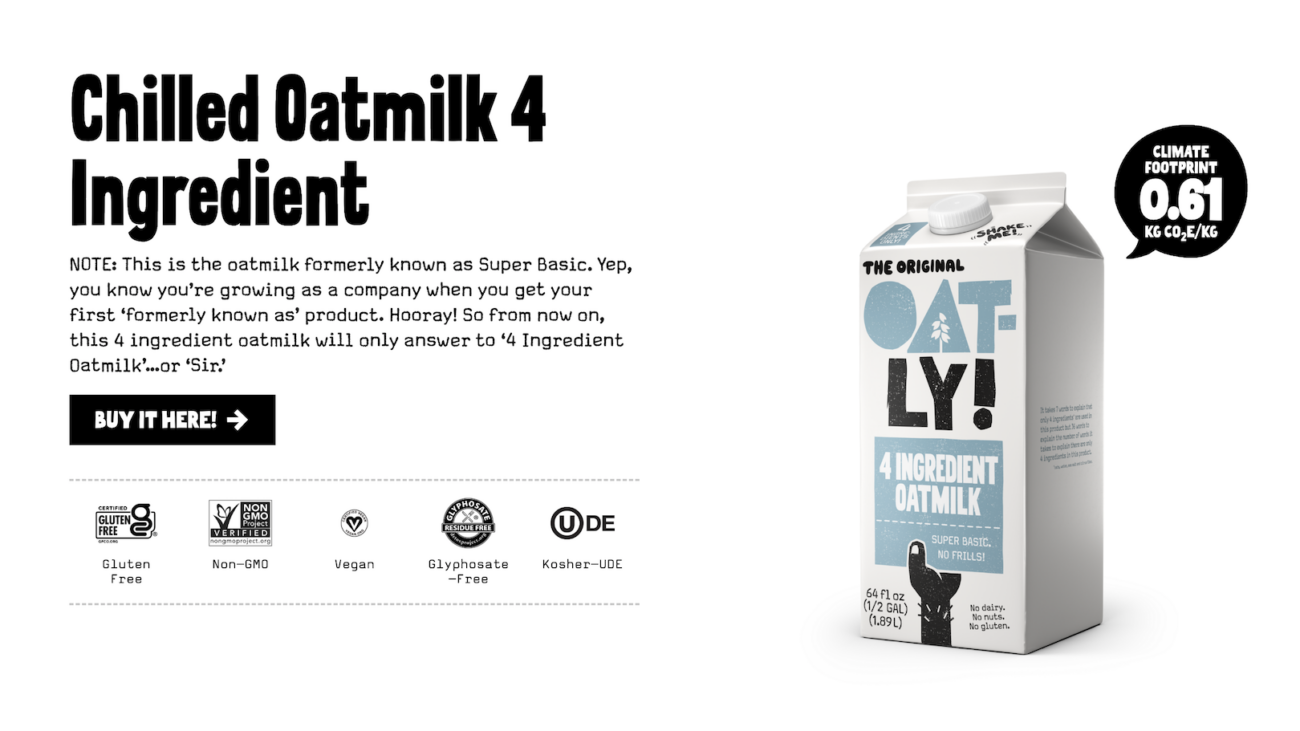
Monday Moves: How Oatly Rebranded Its Voice and Built a Movement (Without Changing the Product)

Before the rebrand, Oatly spoke the same soft, wellness-adjacent language everyone else used. After the rebrand, they unleashed a visual identity that looked like it belonged more on a protest sign than a carton of milk. Distorted type, oversized lettering, handwritten chaos, quirky illustrations, and packaging that looked alive; it was loud, messy, and human.