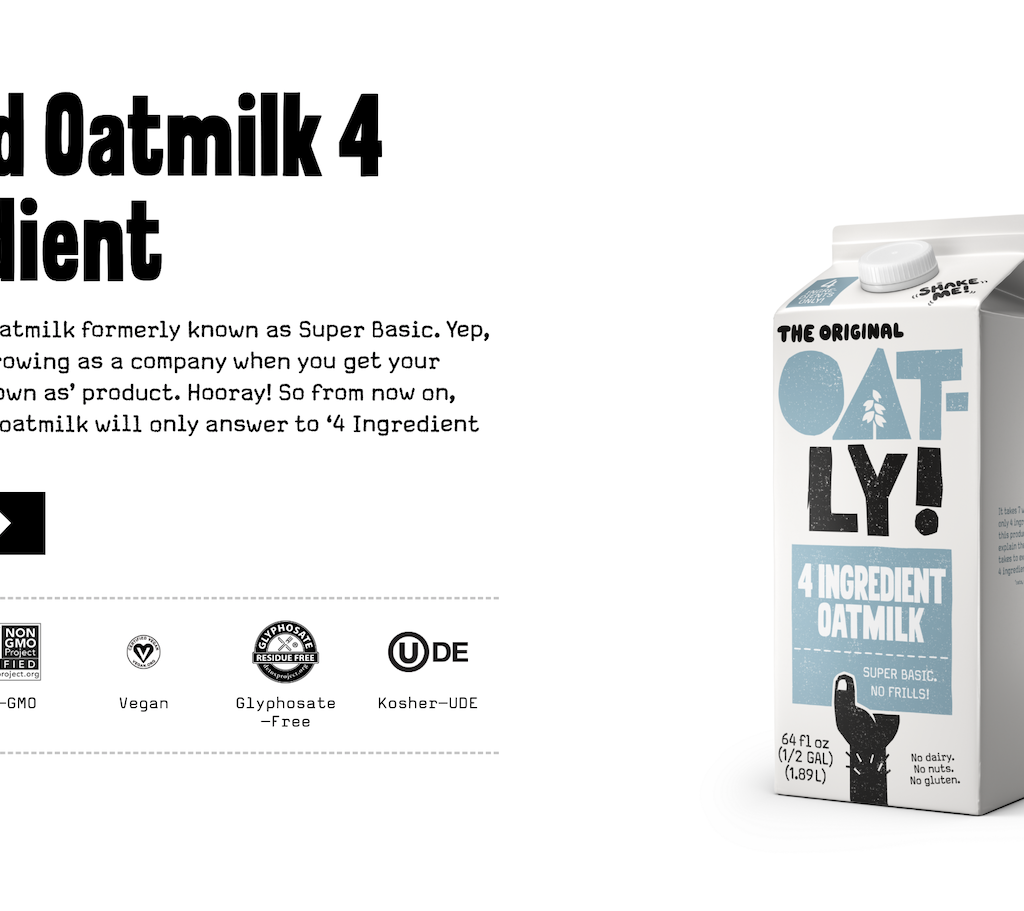
In the world of branding, it’s common to assume you need a brand-new product, a major investment, or a massive ad budget to create separation. But Oatly proved something far more powerful: if you learn to speak boldly, people will listen. Before their rebrand, Oatly was a quiet Scandinavian oat-milk company with packaging and messaging that blended into the background of a crowded grocery aisle. The product itself was good, but the brand had no voice, and without a voice, they had no presence.
Everything changed the moment they decided to stop sounding polite and start sounding confident.
From Bland to Bold: The Moment Oatly Found Its Voice
Oatly’s rebrand didn’t begin with a new formula or a dramatic product innovation. It began with a simple but transformative question: What would happen if we stopped trying to fit into the plant-based milk category… and instead, created our own category with our own attitude?
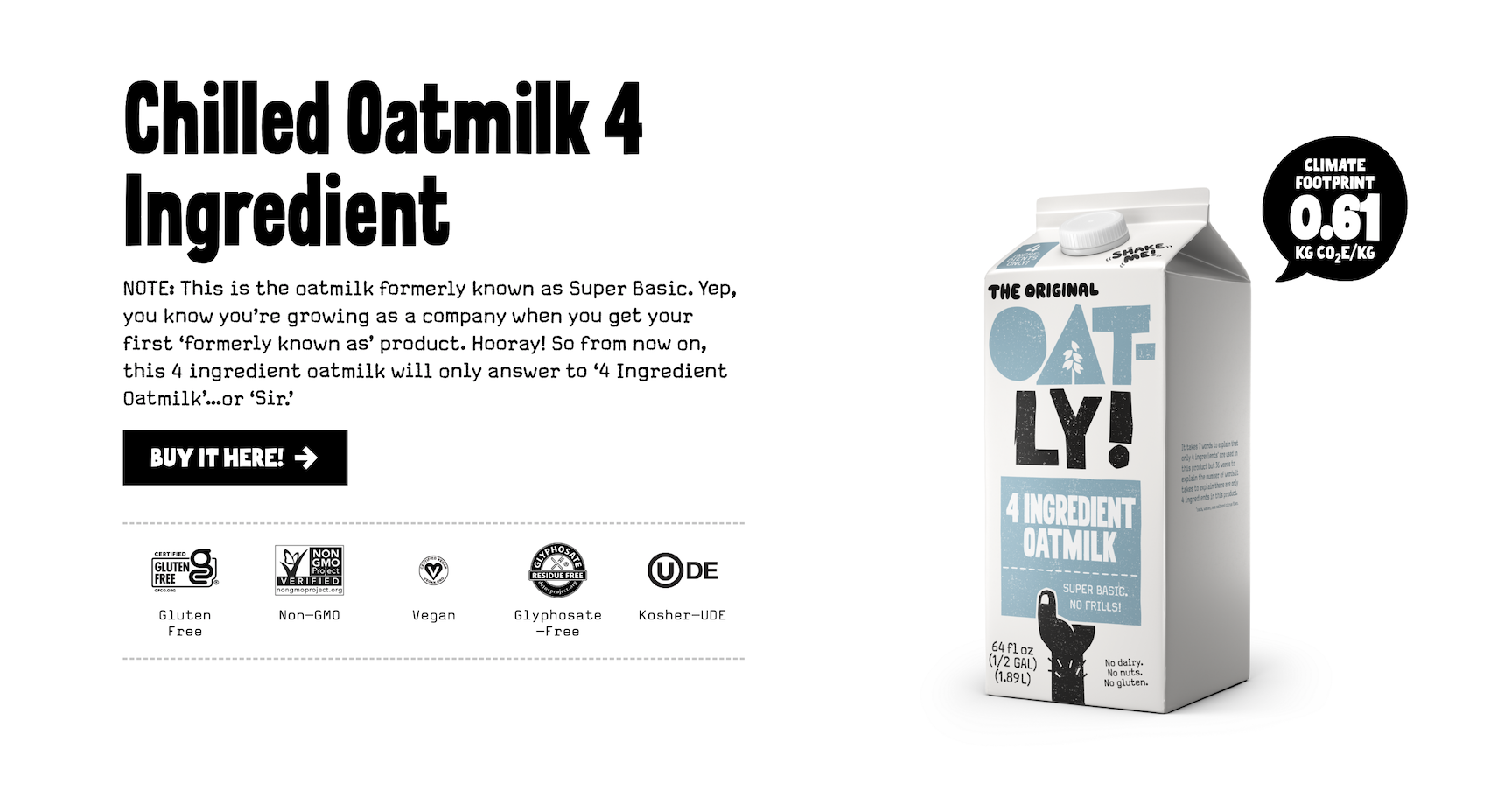
Before the rebrand, Oatly spoke the same soft, wellness-adjacent language everyone else used. After the rebrand, they unleashed a visual identity that looked like it belonged more on a protest sign than a carton of milk. Distorted type, oversized lettering, handwritten chaos, quirky illustrations, and packaging that looked alive — it was loud, messy, and human. That shift alone made the product impossible to ignore on the shelf. But the real power move was the tone.
Oatly stopped whispering about fiber, nutrients, or digestion and started speaking with unfiltered personality. Their packaging didn’t nudge customers gently; it practically grabbed them by the collar with lines like “It’s like milk, but for humans,” “Wow, no cow,” and “This is not milk.” They didn’t try to charm customers. They tried to wake them up.
This is where many brands get uncomfortable. They worry that being bold will make them seem arrogant. They worry that confidence will turn people off. And that fear — that timid, apologetic mindset — is exactly why their marketing blends into the wallpaper. People don’t remember polite. People remember conviction.
Oatly had conviction. And that changed everything.
Oatly Took a Stand — And Consumers Followed
Instead of positioning themselves as a health-conscious alternative, Oatly leaned hard into an identity that challenged the norms of the dairy industry. They began speaking openly about sustainability, climate impact, and the flaws of industrial dairy. They didn’t tiptoe. They didn’t hedge. They didn’t soften the edges to make their message palatable.
They spoke clearly, confidently, and sometimes even controversially.
Brands are often terrified of this kind of clarity, fearing backlash or misinterpretation. But when you hide behind neutrality, you hide from your audience too. Oatly showed that a brand with a spine attracts customers who want something to believe in.
Their rebrand wasn’t just visual or verbal — it was philosophical. It shifted them from being another plant-based option to becoming the oat milk brand with a worldview.
The Result: A Movement, Not Just a Milk
Oatly’s transformation sparked international expansion, fueled viral attention on social media, and helped drive a successful U.S. launch. The company went from quiet to impossible to overlook. And most importantly, this entire rise happened without changing the product at all. The oats stayed the same. The recipe stayed the same. What changed was their willingness to speak up.
And that’s a lesson almost every small business needs to hear: If your brand acts timid, your audience will overlook you. If your messaging lacks confidence, customers will assume your product does too.
You can absolutely be warm, friendly, approachable — and still radiate confidence. These traits are not opposites. In fact, confidence is what makes friendliness trustworthy.
The uncomfortable truth is that many businesses lose money because they are afraid to show how good they really are. They don’t want to appear arrogant, so they drift into humility so deep it becomes invisibility. Meanwhile, a louder, less capable competitor proudly shouts their message — and wins the customer simply because the customer noticed them first.
Oatly didn’t want to blend in anymore. So they didn’t. They chose confidence, clarity, and boldness. That choice built a global brand.
The Takeaway for Small Brands
If Oatly teaches us anything, it’s this: Confidence is not optional. It is the cost of entry.
If you don’t believe in your product loudly, your audience won’t believe in it quietly.
Many businesses fear looking arrogant, but the real danger isn’t confidence — it’s timidity. Confidence earns attention. Timidity loses market share. And in a world full of choices, people follow brands that know who they are.
Oatly knew. And they screamed it from the mountaintops — or at least from every oat milk carton they printed.
Most businesses think a rebrand is about logos, colors, sites, and fonts. It’s not. A rebrand is about aligning your brand with the identity your customer wants to step into.
And yes, the goal is to surface what attracts new customers. But there’s an equal return: reconnecting you to the reason you started. When the soul of the business becomes clear again, the spark follows—both in your brand and in you as the owner.
Our Northbound Blog exists to guide that journey. Build a brand that creates natural separation.
Sign up to receive our free 12-Point Brand Health Checklist (PDF) sent to your inbox!
Because a brand review isn’t just for your audience; it’s just as much for you.
When the world gets noisy (and negative), this simple check-in reconnects you to your soul; why you started your business in the first place, and what you really offer in the market that you were gifted with from the start.